Updates that established the Next-Gen NCLEX-RN® had been in the works for more than a decade. The changes added the clinical judgment model, new item types, new scoring, and a new test design. Prep programs like Slone NCLEX are designed to help you prepare for the adjustments to the Next-Gen NCLEX-RN®. In April 2023, the...
Start preparing NCLEX® example questions by incorporating a diverse range of question formats. Include both the client need and clinical judgment categories. This will give you a framework to create a study plan, prepare for exam day, and pass the NCLEX®. Preparing for the NCLEX® requires careful planning and consideration of several key aspects. While...
When preparing for the NCLEX®, you need to practice with Next Gen NCLEX® practice questions in addition to traditional NCLEX® practice questions.
The Next Gen NCLEX® practice questions are intended to mimic real-life scenarios you’ll encounter in the field.
Consider the unfolding case study presented here as an example of what to expect on exam day.
In 2023, the National Council of State Boards of Nursing (NCSBN) introduced the Next Generation NCLEX® (NGN). This new version of the exam was designed to better assess nursing candidates’ clinical judgment and decision-making abilities. The NCSBN added new question formats that closely mimic real-world scenarios nurses will encounter in their daily practice. The NGN enhances the exam’s relevance to the modern demands of nursing.
The primary goal of this change was to place a greater emphasis on evaluating candidates’ abilities to make clinical judgments in complex situations, which is essential for ... Read more
Updates that established the Next-Gen NCLEX-RN® had been in the works for more than a decade.
The changes added the clinical judgment model, new item types, new scoring, and a new test design.
Prep programs like Slone NCLEX are designed to help you prepare for the adjustments to the Next-Gen NCLEX-RN®.
In April 2023, the National Council of State Boards of Nursing (NCSBN) released the 2023 Next Generation NCLEX® (NGN) exam. This update had been in the works for more than a decade. It came after nursing experts completed extensive research, investigation, and analysis to develop the Nursing Competency and Judgment Measurement Model (NCJMM) and the NGN. This comprehensive work involved an intense examination of nursing practices, educational methodologies, and assessment strategies to ensure these frameworks addressed the evolving challenges in healthcare and accurately measured the competencies required for entry-level nurses. The big question with this update is, “What is the best Next-Gen NCLEX-RN® Prep?”Well, the short answer is that you must understand what changed in the Next-Gen NCLEX-RN®. The long answer is that you need to read the following to help you create the best Next-Gen NCLEX-RN® Prep.
Next-Gen NCLEX-RN® Overview
A quick review of what changed, and then we will go into the details of those changes.
The Clinical Judgment Model was added
New Item Types
New item scoring – they added partial credit!
NGN Test Design
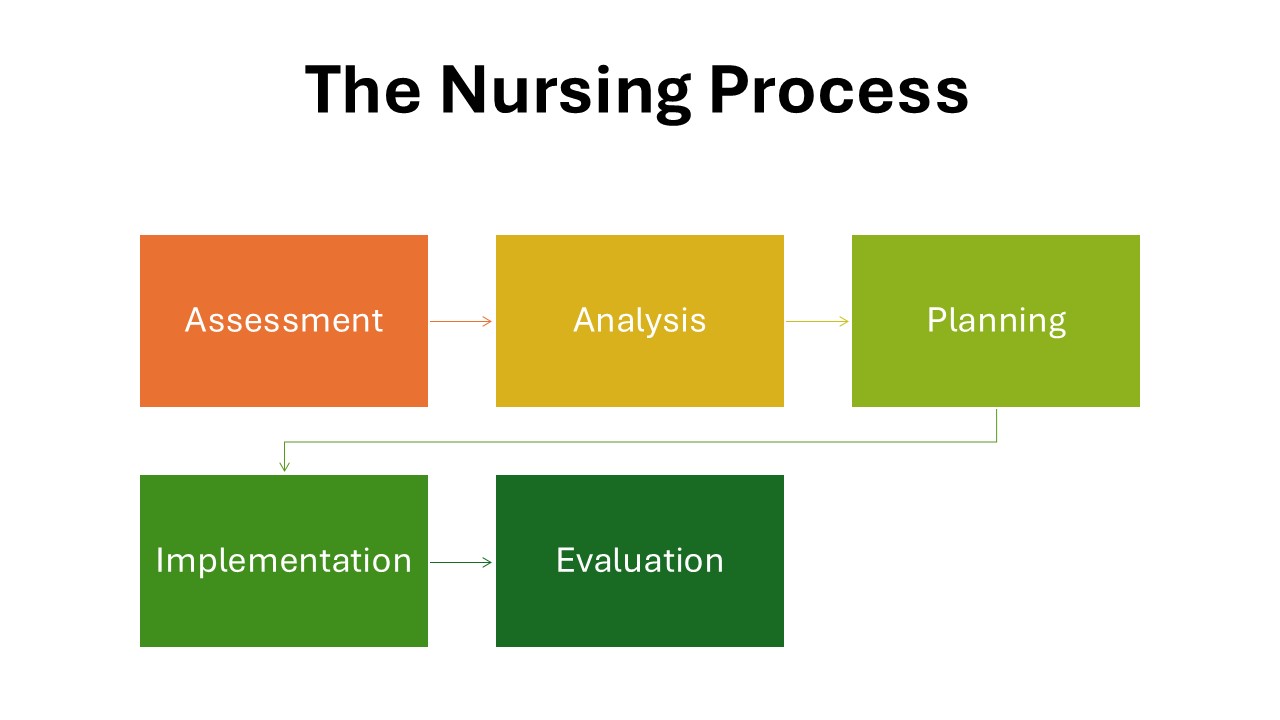
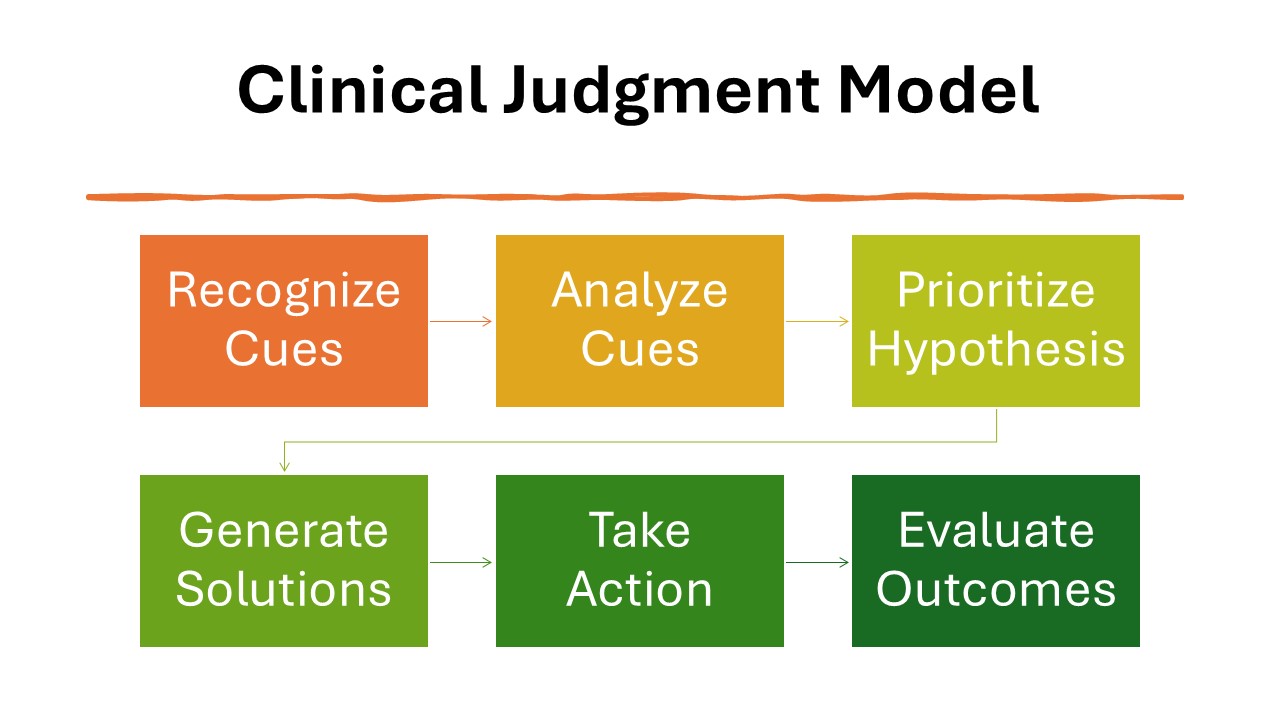
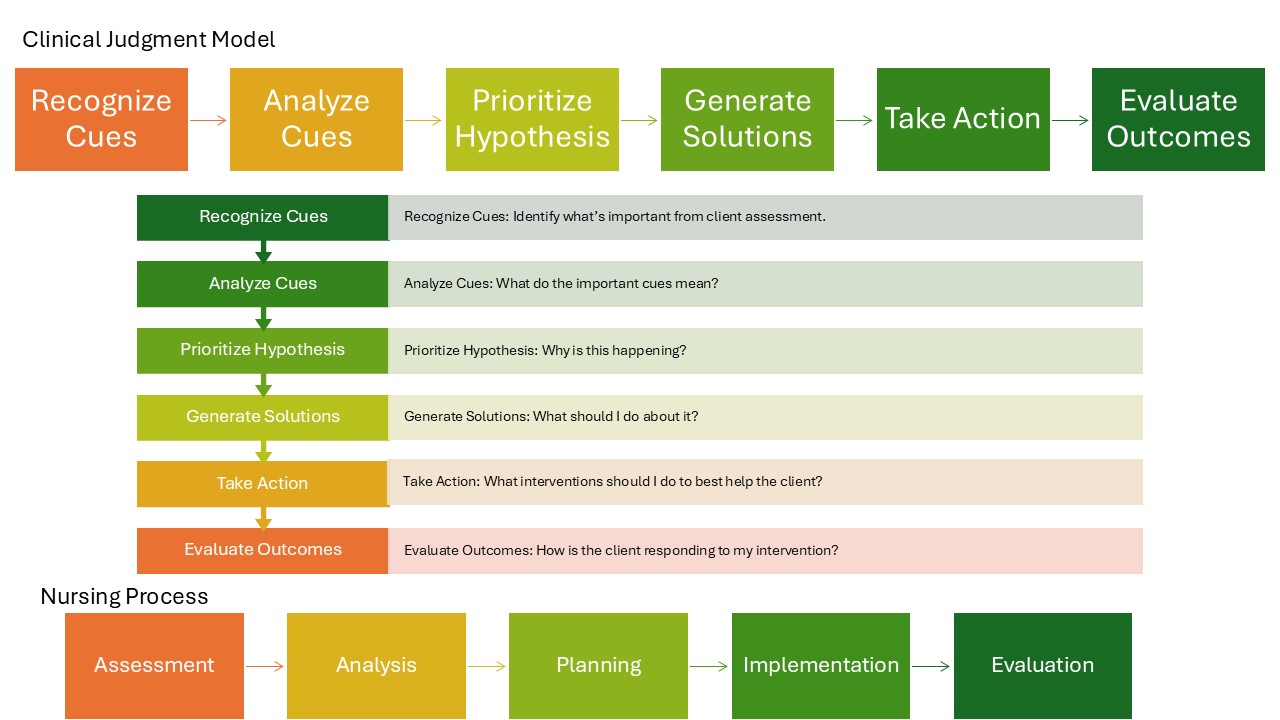
Before 2023, the NCLEX® only utilized the nursing process to evaluate your ability to be a safe nurse. The nursing process follows the assessment, analysis, planning, implementation, and evaluation (ADPIE) model.The 2023 update added the Clinical Judgment model. Now, the Next-Gen NCLEX-RN® incorporates the NCJMM as a framework that aids nurses in decision-making and enhancing clinical judgment skills. According to the NCSBN, clinical judgment is “an iterative process that uses nursing knowledge to observe and assess situations, identify prioritized client concerns, and generate evidence-based solutions for safe client care.”The NCJMM emphasizes critical thinking and cognitive skills essential for accurate clinical judgments. Its main purpose is to help nurse educators and clinicians assess a nurse’s clinical judgment abilities. The model is based on the nursing process and includes six key steps: Recognize cues, Analyze cues, Prioritize hypotheses, Generate solutions, Take action, and Evaluate outcomes. This is how the clinical judgment model works:Here is how the nursing process and the clinical judgment model work together:
New Item Types
Next, the NCLEX® added new item types to better assess the tester’s clinical judgment. The new item types are:
Matrix multiple-choice
Matrix multiple-response
Multiple-response: Select all that apply
Multiple-response: Select N
Multiple-response: Grouping
Drag-and-drop: Cloze
Drag-and-drop: Rationale
Drop-down: Cloze
Drop-down: Rationale
Drop-down: Table
Highlight: Text
Highlight: Table, and
Unfolding Case Studies.
Case studies are real-world nursing scenarios that focus on the six clinical judgment functions of the NCJMM. Each case study is divided into two sections: the left side and the right side.The left side describes the scenario and includes a representation of a client care record, featuring tabs for nursing notes, laboratory results, provider orders, vital signs, and the client’s history and physical examination. Additional tabs may be provided throughout the case study to include more information as the case progresses — similar to real life, where a client’s condition may change, or new information becomes available.The right side presents a series of questions that need to be answered. These questions will be in the form of new item types specifically designed to assess clinical judgment. After the candidate answers a question, the screen will update to present a new question on the right side.
New Next-Gen NCLEX-RN® Scoring
And with the new item types, comes new scoring. This might be everyone’s favorite change, as the NCLEX® now provides partial credit scoring. The new scoring system, called NGN, uses a “polytomous scoring” method that allows for partial credit on certain question types. This means test-takers can earn points for partially correct answers, which differs from the previous system that only recognized answers as correct or incorrect. The new scoring system includes three main rules:
0/1 Scoring: A correct answer earns one point, while an incorrect one earns zero points.
+/- Scoring: A correct answer earns one point, but an incorrect answer deducts one point.
Rationale Scoring: A pair of answers must both be correct in order to earn a point.
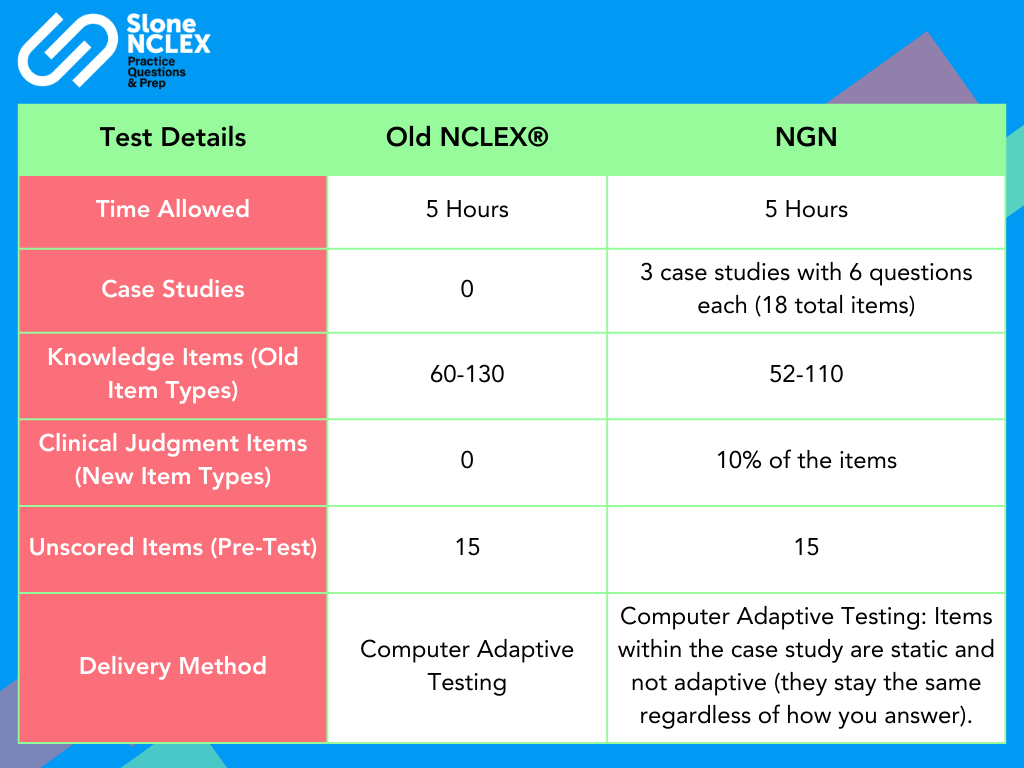
These changes provide a more nuanced assessment of test-takers' knowledge and abilities.Finally, the test design of the NGN changed. This grid will help break down the details of all the changes.
The Bottom Line
Now that you understand the details of the change, let’s discuss the best Next-Gen NCLEX-RN® Prep. The most effective strategy is to practice by taking 200-400 NCLEX® questions each day. Make sure to include a variety of question types, incorporating the new and old item types. Using a structured prep program like Slone NCLEX can help you stay organized in your studies. It can be challenging to maintain focus and rigor in your nursing studies while also preparing for exam day after graduation, but this preparation is essential for your success. Therefore, find a reputable prep program that offers quality questions, detailed rationales, and readiness exams to track your progress and determine your exam readiness. And make sure to stick with it!
[post_title] => What's Different About Next-Gen NCLEX-RN® Prep?
[post_excerpt] =>
[post_status] => publish
[comment_status] => open
[ping_status] => open
[post_password] =>
[post_name] => next-gen-nclex-rn
[to_ping] =>
[pinged] =>
[post_modified] => 2025-01-07 21:36:55
[post_modified_gmt] => 2025-01-07 21:36:55
[post_content_filtered] =>
[post_parent] => 0
[guid] => https://nclex-review.com/?p=930
[menu_order] => 0
[post_type] => post
[post_mime_type] =>
[comment_count] => 0
[filter] => raw
)
[1] => WP_Post Object
(
[ID] => 919
[post_author] => 3
[post_date] => 2025-02-12 06:45:57
[post_date_gmt] => 2025-02-12 06:45:57
[post_content] =>
Start preparing NCLEX® example questions by incorporating a diverse range of question formats.
Include both the client need and clinical judgment categories.
This will give you a framework to create a study plan, prepare for exam day, and pass the NCLEX®.
Preparing for the NCLEX® requires careful planning and consideration of several key aspects. While it may initially seem overwhelming, thoughtfully organizing your study materials can significantly enhance your chances of success.Start by incorporating a diverse range of question formats in your NCLEX® example questions. When selecting NCLEX® example questions, include traditional style questions, which are the most recognizable format, as well as the new question types, such as bowtie questions, that further assess critical thinking and decision-making processes.
Include Client Need Categories in NCLEX® Example Questions
It’s essential to ensure that your NCLEX® example questions represent all eight essential client need categories that are evaluated on the exam. These categories include:
Management of Care: Understanding how to coordinate and manage client care effectively.
Safety and Infection Control: Emphasizing the importance of maintaining client safety and preventing infections in healthcare settings.
Health Promotion and Maintenance: Focusing on strategies to promote overall health and prevent illness in clients.
Psychosocial Integrity: Addressing the emotional and psychological needs of clients to foster a holistic approach to care.
Basic Care and Comfort: Providing fundamental care and comfort measures to support client wellbeing.
Pharmacological and Parenteral Therapies: Knowledge of medication administration and intravenous therapies, ensuring safe and effective treatment.
Reduction of Risk Potential: Identifying potential risks to clients and implementing strategies to minimize them.
Physiological Adaptation: Understanding how the body responds and adapts to illness or injury.
Include Clinical Judgment Categories in NCLEX® Example Questions
Additionally, your NCLEX® example questions should fully integrate the six critical clinical judgment categories. These categories are designed to sharpen your clinical reasoning skills and include:
Recognize Cues: Identifying relevant signs and symptoms that inform client assessments.
Analyze Cues: Experience and interpreting the cues to form accurate clinical judgments.
Prioritize Hypotheses: Determining the most urgent issues that require immediate attention.
Generate Solutions: Crafting effective strategies and interventions to address identified problems.
Take Action: Implementing the selected interventions in a timely and safe manner.
Evaluate Outcomes: Assessing the effectiveness of the interventions and making necessary adjustments.
By thoughtfully integrating these components into your NCLEX® example questions, you will build a comprehensive foundation that prepares you for the exam and your future nursing career.
The nurse is currently providing care to a specific client. What is the first aspect of the client's condition that the nurse should assess to ensure appropriate care?
Among the various interventions and actions available, which one should be prioritized to address the client's immediate needs?
Delegation Questions
The nurse has been assigned a variety of tasks for the day. Which specific tasks can be safely delegated to a licensed practical nurse (LPN) or unlicensed assistive personnel (UAP) without compromising the quality of care?
A newly graduated nurse is responsible for caring for a complex patient with multiple medications and health issues. Which specific task would be the most suitable to delegate to a certified nursing assistant, given their training and scope of practice?
Safety, Infection, and Precaution Questions
A client presenting with a known airborne, contact, or droplet disease is being admitted to the facility. What type of precautions (airborne, droplet, contact, and standard) should the nurse implement to prevent the spread of infection?
What is the proper sterile technique?
Pharmacology
The healthcare provider has prescribed a particular medication for the client. What specific assessments should the nurse perform to determine both the safety of administering this medication and its effectiveness in addressing the client's condition?
Addressing the fundamental principles of safe medication administration, any question should encompass the seven main rights: right person, right medication, right dose, right time, right route, right reason, and right documentation.
Dosage Calculation Questions
Leadership
The charge nurse is tasked with coordinating client assignments among the nursing staff. Which client, based on their condition and needs, is most appropriate to assign to the newly graduated nurse in order to foster both learning and safe care delivery?
In the triage process, when facing a group of clients with varying injuries, which client should be classified as emergent due to the severity of their condition?
A group of nurses has expressed dissatisfaction regarding a recently implemented policy by the nurse manager. What strategies should the manager employ to effectively address and resolve this conflict while promoting a positive workplace environment?
During an unexpected surge of patients in the emergency department, the nurse manager must prioritize patient care. What key factor should be the primary consideration in making client assignments to ensure effective care delivery amidst the chaos?
Fundamental Questions
When caring for a client diagnosed with a specific disease, what position should the nurse place them in to enhance their comfort and safety?
For a patient who has just been diagnosed with diabetes and is beginning insulin therapy, what crucial teaching point should the nurse emphasize to ensure understanding and adherence to the medication regimen?
In the event of a patient being admitted with symptoms such as fever, chills, and a productive cough, what initial nursing action should be taken to assess and address their condition?
When evaluating a client for signs of fluid volume deficit, which clinical manifestation should the nurse recognize as the most alarming indicator that requires immediate attention?
For a patient taking medication that causes orthostatic hypotension, what specific instructions should the nurse provide to minimize the risk of falls and ensure the patient's safety?
What is the priority nursing intervention that should be implemented for a client who has a nasogastric tube in place to maintain proper function and prevent complications?
The Bottom Line
Engaging with NCLEX® example questions is essential for your NCLEX® prep, as it familiarizes you with the format and style of the actual exam. This practice not only hones your critical thinking skills but also allows you to confront complex clinical scenarios that you will likely encounter on test day. By working through these practice questions, you will be able to pinpoint specific areas where your understanding may be lacking, in turn, exposing any knowledge gaps that need to be addressed.
[post_title] => Add These NCLEX® Example Questions to Your Study Guide
[post_excerpt] =>
[post_status] => publish
[comment_status] => open
[ping_status] => open
[post_password] =>
[post_name] => nclex-example-questions
[to_ping] =>
[pinged] =>
[post_modified] => 2024-12-31 20:37:19
[post_modified_gmt] => 2024-12-31 20:37:19
[post_content_filtered] =>
[post_parent] => 0
[guid] => https://nclex-review.com/?p=919
[menu_order] => 0
[post_type] => post
[post_mime_type] =>
[comment_count] => 0
[filter] => raw
)
[2] => WP_Post Object
(
[ID] => 911
[post_author] => 3
[post_date] => 2025-02-06 06:45:34
[post_date_gmt] => 2025-02-06 06:45:34
[post_content] =>
When preparing for the NCLEX®, you need to practice with Next Gen NCLEX® practice questions in addition to traditional NCLEX® practice questions.
The Next Gen NCLEX® practice questions are intended to mimic real-life scenarios you’ll encounter in the field.
Consider the unfolding case study presented here as an example of what to expect on exam day.
In 2023, the National Council of State Boards of Nursing (NCSBN) introduced the Next Generation NCLEX® (NGN). This new version of the exam was designed to better assess nursing candidates' clinical judgment and decision-making abilities. The NCSBN added new question formats that closely mimic real-world scenarios nurses will encounter in their daily practice. The NGN enhances the exam's relevance to the modern demands of nursing. The primary goal of this change was to place a greater emphasis on evaluating candidates' abilities to make clinical judgments in complex situations, which is essential for ensuring safe nursing practice. The NGN includes new question formats such as case studies, matrix questions, and bowtie questions. These new item types require you to analyze information and make decisions based on the presented scenarios. Unlike the previous NCLEX®, the NGN also now allows for partial credit on certain questions. This enables a better assessment of your nursing knowledge. The new exam aims to present scenarios that reflect the actual situations nurses face in practice, incorporating relevant lab values and reference ranges.When preparing for the NCLEX®, you need to practice with Next Gen NCLEX® practice questions in addition to traditional practice questions. The new next-generation item types include Extended Multiple Response, Matrix/Grid, Drag and Drop, Drop Down, Highlight, and Bowtie.The NGN has also introduced the unfolding case study, which presents a client scenario in six stages. You will start with a scenario and answer a question based on that information. You will then receive more information progressively and will be required to make clinical decisions based on the unfolding details. This format simulates real-life client care situations and necessitates the identification of cues, analysis of cues, prioritization of hypotheses, generation of solutions, actions taken, and evaluation of outcomes. The purpose of these unfolding case studies is to assess your clinical judgment throughout the scenario.Unfolding case studies present information over time, often displayed in medical records or flow sheets that require evaluation. The tester will review the information and answer questions throughout these phases. Unfolding case studies can include various question types, including both traditional and next-generation NCLEX® item types, assessing the user across all six clinical judgment categories.To illustrate what to expect on exam day, consider this unfolding case study — one of several next gen NCLEX® practice questions you can find in prep programs like Slone NCLEX®. For the purposes of this blog, we will present the information using only traditional item types to make it easier to read and understand.Scenario:A 52-year-old presents to the emergency room via ambulance with chest pain, shortness of breath, and jaw pain. Vital signs are BP 118/70 mmHg, HR 108 bpm, RR 28 breaths/min, SpO2 is 94% on 2L nasal cannula.
Question 1: Recognize cues
Based on the initial presentation which of these cues would be most important to investigate further to determine the potential underlying cause?
A: Complaints of chest pain and dyspnea
B: Heart Rate
C: Blood Pressure
D: Oxygenation
Next information provided:The patient is administered a 12-lead ECG and had labs drawn. Electrocardiogram (ECG) shows ST-segment elevation in the anterior leads. Lab values are as follows:Troponin T:
28 ng/mL
Complete Blood Count (CBC):
WBC (4.5–11.0 mm 3) 5.8
Hgb (12–16 g/dL) 11.2
HCT (36%-48%) 32%
Platelets (150-450 x103/µl) 150
Neutrophil % (42–72) 65
Band forms (3–5%) 0
Basic Metabolic Panel (BMP):
Sodium (135–145 mEq/L) 142
Potassium (3.5–5.0 mEq/L) 4.8
Glucose (70–110 mg/dL) 140
BUN (7–25 mg/dl) 26
Creatinine (0.6–1.2 mg/dL) 1.6
Chloride (96-106 mEq/L) 100
Calcium (8.5-10.5) 9.0 mEq/L
Question 2: Analyze cues
Based upon the information presented, the nurse identifies which finding as the most concerning and requiring immediate action?
A: ST-Elevation
B: Troponin of 28 ng/mL
C: WBC of 5.8 mm 3
D: Creatinine 1.6 mg/dL
Next information provided:The client is very anxious and cries to the nurse, “What is happening?”
Question 3: Prioritize Hypotheses
Based on the initial presentation and ECG findings, what does the nurse identify as the likely diagnosis for this client?
A: Myocardial infarction
B: Pulmonary embolism
C: Panic Attack
D: Infected oral abscess
Next information provided:The patient is given nitroglycerin sublingual x 2 doses. The client states that their chest pain has slightly improved.
Question 4: Generate Solutions
What is the next appropriate nursing intervention based on the patient's response to nitroglycerin?
A: Administer morphine sulfate
B: Contact the healthcare provider immediately
C: Monitor vital signs and continue to assess pain level
D: Start an IV fluid bolus
Next information provided:The nurse calls the provider and updates them on the client’s assessment, lab results, and response to medication. The provider places the following orders.
Question 5: Take Actions
Which of the following orders does the nurse complete first?
A: Prepare the client for cardiac catheterization.
B: Obtain repeat troponins every four to six hours.
C: Reconcile the client’s medication history.
D: Initiate a 1000mL fluid bolus.
Next information provided:The client is admitted to the cardiovascular step-down unit after having a cardiac catheterization where they had two drug-eluding stents placed in their coronary arteries.
Question 6: Evaluate Outcomes
The nurse is providing education to the client on coronary artery disease and the prevention of further myocardial infarctions. Which of the following statements by the client indicates an understanding of the teaching for this client?
A: "I will avoid exercising, so I don’t strain my heart.”
B: "I will take my clopidogrel if I have any chest pain.”
C: "Now that I have stents in place, I will feel 100% better.”
D: "I will avoid adding any salt to my foods when cooking.”
The correct answers are:
A
A
A
B
A
D
The Bottom Line
When gearing up to take the NCLEX®, it is crucial to incorporate Next Gen NCLEX® practice questions into your study routine. These questions place a significant emphasis on clinical judgment and complex scenarios, reflecting the scenarios you will endure as a nurse. It’s important to recognize that relying solely on traditional practice questions will not fully equip you for the challenges you’ll face on test day. Engaging with Next Gen NCLEX® practice questions, such as detailed case studies like the one above, will not only help you become familiar with these new question formats but also enhance your critical thinking abilities. This preparation is essential for navigating the exam, helping you to be comfortable on exam day, and ultimately achieving success.
[post_title] => What are Next Gen NCLEX® Practice Questions?
[post_excerpt] =>
[post_status] => publish
[comment_status] => open
[ping_status] => open
[post_password] =>
[post_name] => next-gen-nclex-practice-questions
[to_ping] =>
[pinged] =>
[post_modified] => 2025-02-07 13:03:57
[post_modified_gmt] => 2025-02-07 13:03:57
[post_content_filtered] =>
[post_parent] => 0
[guid] => https://nclex-review.com/?p=911
[menu_order] => 0
[post_type] => post
[post_mime_type] =>
[comment_count] => 0
[filter] => raw
)
)
[post_count] => 3
[current_post] => -1
[before_loop] =>
[in_the_loop] =>
[post] => WP_Post Object
(
[ID] => 930
[post_author] => 3
[post_date] => 2025-02-13 06:45:44
[post_date_gmt] => 2025-02-13 06:45:44
[post_content] =>
Updates that established the Next-Gen NCLEX-RN® had been in the works for more than a decade.
The changes added the clinical judgment model, new item types, new scoring, and a new test design.
Prep programs like Slone NCLEX are designed to help you prepare for the adjustments to the Next-Gen NCLEX-RN®.
In April 2023, the National Council of State Boards of Nursing (NCSBN) released the 2023 Next Generation NCLEX® (NGN) exam. This update had been in the works for more than a decade. It came after nursing experts completed extensive research, investigation, and analysis to develop the Nursing Competency and Judgment Measurement Model (NCJMM) and the NGN. This comprehensive work involved an intense examination of nursing practices, educational methodologies, and assessment strategies to ensure these frameworks addressed the evolving challenges in healthcare and accurately measured the competencies required for entry-level nurses. The big question with this update is, “What is the best Next-Gen NCLEX-RN® Prep?”Well, the short answer is that you must understand what changed in the Next-Gen NCLEX-RN®. The long answer is that you need to read the following to help you create the best Next-Gen NCLEX-RN® Prep.
Next-Gen NCLEX-RN® Overview
A quick review of what changed, and then we will go into the details of those changes.
The Clinical Judgment Model was added
New Item Types
New item scoring – they added partial credit!
NGN Test Design
Before 2023, the NCLEX® only utilized the nursing process to evaluate your ability to be a safe nurse. The nursing process follows the assessment, analysis, planning, implementation, and evaluation (ADPIE) model.The 2023 update added the Clinical Judgment model. Now, the Next-Gen NCLEX-RN® incorporates the NCJMM as a framework that aids nurses in decision-making and enhancing clinical judgment skills. According to the NCSBN, clinical judgment is “an iterative process that uses nursing knowledge to observe and assess situations, identify prioritized client concerns, and generate evidence-based solutions for safe client care.”The NCJMM emphasizes critical thinking and cognitive skills essential for accurate clinical judgments. Its main purpose is to help nurse educators and clinicians assess a nurse’s clinical judgment abilities. The model is based on the nursing process and includes six key steps: Recognize cues, Analyze cues, Prioritize hypotheses, Generate solutions, Take action, and Evaluate outcomes. This is how the clinical judgment model works:Here is how the nursing process and the clinical judgment model work together:
New Item Types
Next, the NCLEX® added new item types to better assess the tester’s clinical judgment. The new item types are:
Matrix multiple-choice
Matrix multiple-response
Multiple-response: Select all that apply
Multiple-response: Select N
Multiple-response: Grouping
Drag-and-drop: Cloze
Drag-and-drop: Rationale
Drop-down: Cloze
Drop-down: Rationale
Drop-down: Table
Highlight: Text
Highlight: Table, and
Unfolding Case Studies.
Case studies are real-world nursing scenarios that focus on the six clinical judgment functions of the NCJMM. Each case study is divided into two sections: the left side and the right side.The left side describes the scenario and includes a representation of a client care record, featuring tabs for nursing notes, laboratory results, provider orders, vital signs, and the client’s history and physical examination. Additional tabs may be provided throughout the case study to include more information as the case progresses — similar to real life, where a client’s condition may change, or new information becomes available.The right side presents a series of questions that need to be answered. These questions will be in the form of new item types specifically designed to assess clinical judgment. After the candidate answers a question, the screen will update to present a new question on the right side.
New Next-Gen NCLEX-RN® Scoring
And with the new item types, comes new scoring. This might be everyone’s favorite change, as the NCLEX® now provides partial credit scoring. The new scoring system, called NGN, uses a “polytomous scoring” method that allows for partial credit on certain question types. This means test-takers can earn points for partially correct answers, which differs from the previous system that only recognized answers as correct or incorrect. The new scoring system includes three main rules:
0/1 Scoring: A correct answer earns one point, while an incorrect one earns zero points.
+/- Scoring: A correct answer earns one point, but an incorrect answer deducts one point.
Rationale Scoring: A pair of answers must both be correct in order to earn a point.
These changes provide a more nuanced assessment of test-takers' knowledge and abilities.Finally, the test design of the NGN changed. This grid will help break down the details of all the changes.
The Bottom Line
Now that you understand the details of the change, let’s discuss the best Next-Gen NCLEX-RN® Prep. The most effective strategy is to practice by taking 200-400 NCLEX® questions each day. Make sure to include a variety of question types, incorporating the new and old item types. Using a structured prep program like Slone NCLEX can help you stay organized in your studies. It can be challenging to maintain focus and rigor in your nursing studies while also preparing for exam day after graduation, but this preparation is essential for your success. Therefore, find a reputable prep program that offers quality questions, detailed rationales, and readiness exams to track your progress and determine your exam readiness. And make sure to stick with it!
[post_title] => What's Different About Next-Gen NCLEX-RN® Prep?
[post_excerpt] =>
[post_status] => publish
[comment_status] => open
[ping_status] => open
[post_password] =>
[post_name] => next-gen-nclex-rn
[to_ping] =>
[pinged] =>
[post_modified] => 2025-01-07 21:36:55
[post_modified_gmt] => 2025-01-07 21:36:55
[post_content_filtered] =>
[post_parent] => 0
[guid] => https://nclex-review.com/?p=930
[menu_order] => 0
[post_type] => post
[post_mime_type] =>
[comment_count] => 0
[filter] => raw
)
[comment_count] => 0
[current_comment] => -1
[found_posts] => 34
[max_num_pages] => 12
[max_num_comment_pages] => 0
[is_single] =>
[is_preview] =>
[is_page] =>
[is_archive] => 1
[is_date] =>
[is_year] =>
[is_month] =>
[is_day] =>
[is_time] =>
[is_author] => 1
[is_category] =>
[is_tag] =>
[is_tax] =>
[is_search] =>
[is_feed] =>
[is_comment_feed] =>
[is_trackback] =>
[is_home] =>
[is_privacy_policy] =>
[is_404] =>
[is_embed] =>
[is_paged] => 1
[is_admin] =>
[is_attachment] =>
[is_singular] =>
[is_robots] =>
[is_favicon] =>
[is_posts_page] =>
[is_post_type_archive] =>
[query_vars_hash:WP_Query:private] => 9d02abddc84352e0d2198460b635d23b
[query_vars_changed:WP_Query:private] =>
[thumbnails_cached] =>
[allow_query_attachment_by_filename:protected] =>
[stopwords:WP_Query:private] =>
[compat_fields:WP_Query:private] => Array
(
[0] => query_vars_hash
[1] => query_vars_changed
)
[compat_methods:WP_Query:private] => Array
(
[0] => init_query_flags
[1] => parse_tax_query
)
)